

Discovering Judith Schaechter’s ‘Super/Natural’: A Contemporary Reflection on Nature and Human Connection
An Artistic Sanctuary Inspired by Nature
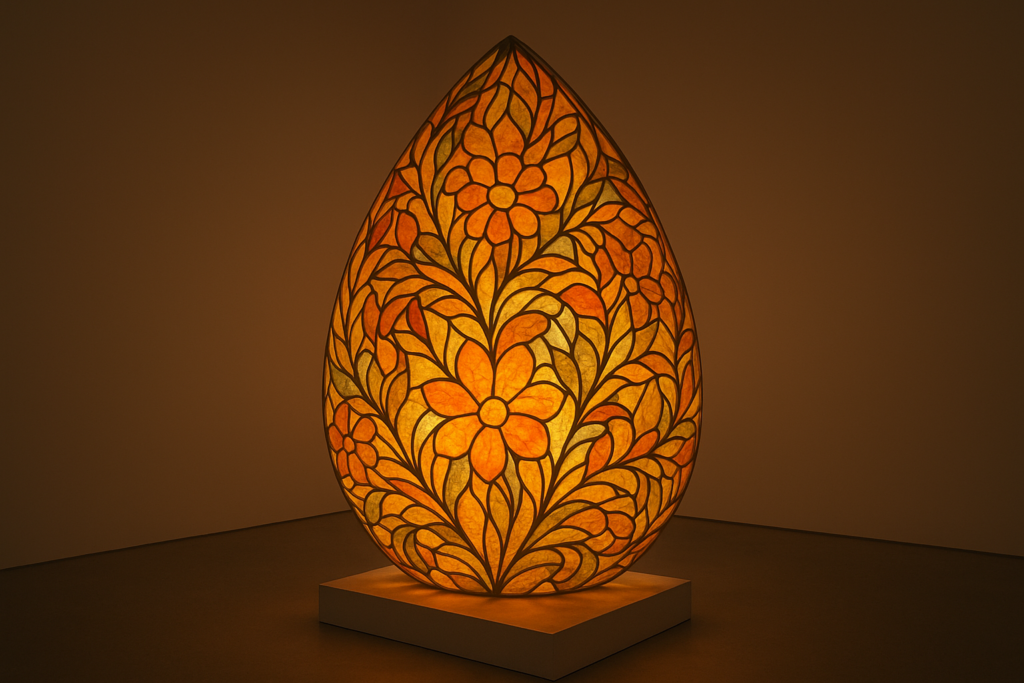
Judith Schaechter’s latest installation, titled ‘Super/Natural’, offers a captivating experience that combines traditional stained glass techniques with contemporary artistic exploration. Resembling a miniature chapel, this glowing sculpture provides an intimate space for contemplation, emphasizing humanity’s deep-seated fascination with the natural world.
The Artistic Vision and Inspiration
Biophilia and Secular Worship
Inspired by the theory of biophilia, which suggests that humans have an innate attraction to nature, Schaechter’s work celebrates this bond. She describes the installation as a secular sanctuary—an environment that encourages viewers to meditate on beauty, morality, and our relationship with the natural environment.
Creative Process and Neuroscientific Influence
Constructed over nearly two years and comprising 65 hand-made stained glass panes, ‘Super/Natural’ was developed during Schaechter’s residency at the Penn Center for Neuroaesthetics. This program explores how our brains perceive art and beauty, informing Schaechter’s aim to create a deeply immersive and personal experience for each viewer.
Design and Composition
The sculpture stands approximately eight feet tall, topped with a small geodesic dome, and is filled with vibrant depictions of flora, insects, birds, and fantastical organic forms. The interplay of light and color invites visitors into a luminous world that celebrates the complexity and wonder of nature.
Practical Takeaways for Art Enthusiasts
- Immersive art can foster personal reflection on universal themes like connection and beauty.
- Combining traditional craft with scientific insights can deepen the viewer’s engagement and understanding.
- Contemporary artists are increasingly exploring the intersections of neuroscience, ecology, and aesthetics.
Comparison with Other Environmental Art
Unlike large-scale environmental installations, Schaechter’s work offers a personal, contemplative space that emphasizes intimacy and detail. It aligns with movements that seek to make art a space for mental and emotional reflection on ecological themes.
FAQs
What is the significance of using stained glass in Schaechter’s work?
Stained glass has a long history of association with sacred spaces and storytelling. Schaechter reimagines this medium to create a secular sanctuary that invites viewers to reflect on modern relationships with nature.
How does neuroscience influence Schaechter’s artistic process?
Her residency at the Penn Center for Neuroaesthetics provided insights into how the brain perceives beauty and art, guiding her to craft an experience that resonates on a neurological level, fostering deeper emotional engagement.
Learn More
For a detailed exploration of Judith Schaechter’s ‘Super/Natural’ and its artistic and scientific context, visit the original article on Colossal.
Original Source
This article was created as an original summary and commentary based on a source item from www.thisiscolossal.com. Read the original source here: Get ‘Super/Natural’ Inside Judith Schaechter’s Stained Glass Sculpture.